One of the most common concerns homeowners have about going solar is shade. Many people assume that if their roof isn’t in full sun all day, solar simply won’t work.
In reality, partial shade does not automatically rule out solar, especially with modern system design. Homes across North and South Carolina often have trees, neighboring structures, dormers, or roof features that create some shade during parts of the day. That doesn’t mean solar is off the table.
Understanding how shade actually affects solar production helps homeowners make informed decisions instead of ruling out solar based on assumptions. Solar doesn’t require perfect conditions. It requires smart design.
How Shade Really Affects Solar Panels
Solar panels generate electricity based on available sunlight, so shade does reduce output where it occurs. However, the impact of shade depends on how much shade, when it happens, and how long it lasts.
Not all shade is equal. For example:
- Brief shade in the early morning or late afternoon has limited impact
- Partial shade on one roof section may not affect others
- Seasonal shade can change dramatically throughout the year
Occasional or partial shade often has a much smaller effect on total production than homeowners expect. Solar panels continue producing power even when sunlight isn’t ideal.
SolarReviews explains that solar panels do not need direct sunlight all day to produce electricity, and that partial shade can reduce output without stopping production entirely.
Why Partial Shade Doesn’t Kill Solar Production
Older solar systems were far more sensitive to shade. In the past, shading on one panel could significantly reduce output across the entire system.
Modern solar systems are designed differently. Today’s layouts and technologies account for real-world conditions like:
- Trees
- Chimneys and vents
- Roof angles and dormers
- Neighboring structures
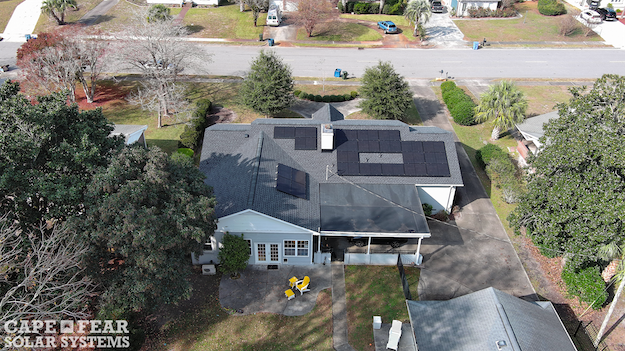
Panels are positioned strategically so shaded areas don’t disproportionately affect the entire system. For many homes, partial shade results in a modest reduction, not a dealbreaker.
Cape Fear Solar designs solar systems that account for partial shade and roof obstructions common across Coastal North Carolina homes through their customized solar solutions.
The Role of Inverters and Panel-Level Technology
One of the biggest advancements in solar performance under partial shade is inverter technology.
Modern systems often use:
- Panel-level electronics
- Microinverters or optimized inverter setups
These technologies allow each panel to operate independently. That means a shaded panel won’t drag down the performance of panels in full sun.
Choosing the right inverter configuration is especially important for homes with partial shade. It’s one of the most impactful decisions in system design for shaded or complex roofs.
See this page from Enphase to learn more about what solar microinverters are and how solar microinverters allow each panel to operate independently, helping reduce the impact of partial shading on overall system performance.
How Tree Coverage and Seasonal Shade Are Evaluated
Shade isn’t static. It changes throughout the day and across seasons.
Trees that block sunlight in winter may not have the same impact in summer. Sun angles shift throughout the year, and leaf coverage changes dramatically in coastal and inland Carolina environments.
Professional solar evaluations use shade analysis tools to:
- Model sun exposure across the entire year
- Account for seasonal sun paths
- Identify when and where shade actually matters
This approach produces realistic performance estimates instead of assumptions based on one moment in time.
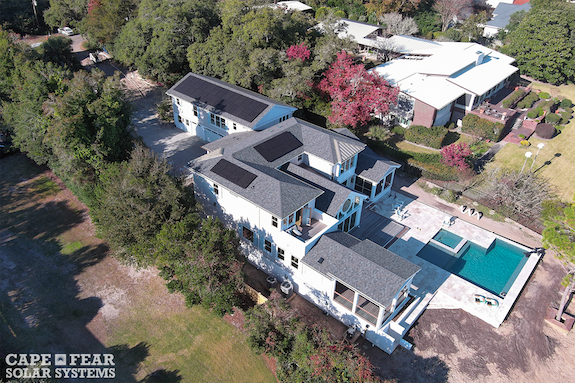
You can see how Cape Fear Solar evaluates shade and roof layout in real-world installations across Coastal North Carolina through our recent projects.
Can Trimming Trees Improve Solar Performance?
In some cases, selective tree trimming can improve solar access, but it’s not always necessary and full tree removal is rarely required.
Modern system design often works around existing landscaping. Many homeowners prefer to preserve mature trees for shade, aesthetics, and environmental reasons.
When tree trimming is considered, it should be:
- Minimal and targeted
- Coordinated with solar layout
- Evaluated alongside system design alternatives
In some cases, selective tree trimming can improve solar access, but it is not always necessary. Modern system design often works around existing landscaping using panel-level electronics and optimized layouts.
For homeowners who want a deeper technical explanation of how shade affects panel wiring, bypass diodes, and inverter architecture, Palmetto offers a comprehensive breakdown of today’s shade-mitigation strategies.
Monitoring Helps Track Real-World Shade Impact
Monitoring software allows homeowners to see exactly how their system performs day to day. This transparency removes guesswork and provides confidence over time.
Monitoring helps homeowners:
- Track daily and seasonal production
- Identify patterns related to shade
- Confirm that the system is performing as expected
If shade affects production more than anticipated, monitoring makes it easy to spot trends and address questions early. For most systems, performance remains stable even with partial shade.
Cape Fear Solar Systems can include monitoring and ongoing support so homeowners can clearly understand how their system performs over time. Learn more about your local experts and why we are here.
FAQs: Solar Panels and Shade
Does shade make solar not worth it?
No. Many homes with partial shade still produce enough energy to make solar worthwhile.
Will one shaded panel affect the whole system?
Not with modern inverters and panel-level technology.
Does shade change throughout the year?
Yes. Seasonal sun angles and tree growth can significantly affect shading patterns.
Shade Requires Smart Design, Not Perfect Conditions
Partial shade does not automatically disqualify a home from solar. The key is understanding how shade behaves and designing a system around it.
With professional evaluation, modern inverter technology, and thoughtful layout, solar can perform well in real-world conditions across the Coastal Carolinas.
If you’re unsure how shade affects your home, get a quote from Cape Fear Solar Systems and receive a professional evaluation designed specifically for your property.