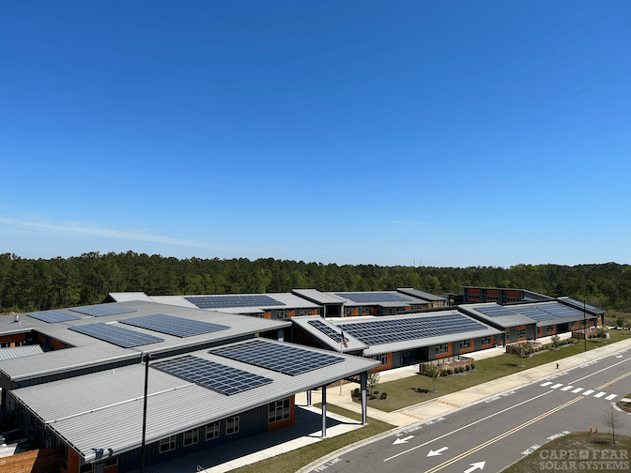
For many North and South Carolina business owners, monthly energy bills are among the most consistent and costly operating expenses. Between rising utility rates and the growing push for sustainable practices, more companies are asking one question: Is now the time to invest in solar?
Across the Carolinas, commercial solar installations are helping businesses cut energy costs, stabilize long-term expenses, and gain a competitive advantage in their markets. At Cape Fear Solar Systems, we guide businesses through the process, from feasibility analysis to installation, ensuring your investment delivers measurable results. Here’s what you need to know before making the switch.
Why More NC and SC Businesses Are Going Solar in 2025
Solar’s appeal isn’t just about “going green.” For commercial properties, it’s about reducing operating costs and improving financial stability.
- Lower monthly energy expenses: Commercial buildings often use the most electricity during peak daylight hours, making solar an ideal offset.
- Federal and state incentives: The 30% Federal Investment Tax Credit (ITC) and accelerated depreciation through MACRS can drastically improve payback periods.
- Improved sustainability ratings: Many clients and investors now weigh environmental performance in their decisions.
- Energy independence: Generating your own power helps protect against rising rates and grid instability.
According to the U.S. Solar Market Insight Q2 2025 report, commercial solar adoption in the Southeast has risen by over 25% year-over-year.
Many local business owners are already seeing a strong return on investment. You can explore how we help businesses reduce energy costs with solar through tailored design and expert installation.

Is Your Building a Good Fit for Solar?
Not every property is ready for a rooftop array, but many are. Key factors we assess during a site evaluation include:
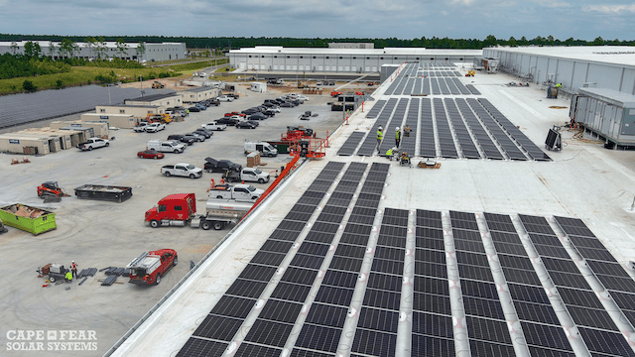
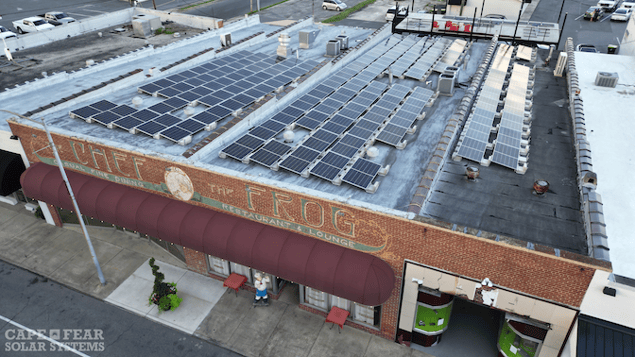
- Roof structure and slope: Flat or low-slope roofs with minimal shading are ideal.
- Daytime energy usage: Buildings with consistent daytime operations, such as warehouses, offices, or retail stores, get the most from solar.
- Space for ground-mounted systems: If roof space is limited, parking lots and unused land can often be used.
- Interconnection access: A suitable electrical setup ensures smooth utility approval.
You can learn more about determining your building’s suitability by reviewing Energy.gov’s rooftop solar potential guidance or get a quote from our team.
Common Concerns (and How We Address Them)
“Will solar interrupt daily operations?”
Our commercial projects are designed with minimal disruption. Installations are typically completed in phases so your business can operate normally.
“What’s the return on investment?”
Commercial property owners and managers can expect an internal rate of return of 7-10% and the system having a payback period of 6-10 years.
“What about weather and cloudy days?”
Solar panels continue producing power even when it’s overcast. Our designs factor in annual weather patterns for realistic performance estimates.
How the Process Works with Cape Fear Solar Systems
We make commercial solar straightforward with a clear, step-by-step process:
- Site Visit & Analysis – We measure your available space, assess your electrical systems, and gather production data.
- Custom Design & Financial Modeling – You receive a proposal with layout renderings, projected savings, and ROI timelines.
- Permitting & Scheduling – We handle all the paperwork and coordinate with your utility.
- Professional Installation – Our in-house team ensures a clean, code-compliant installation.
- Activation & Monitoring – Once live, you’ll have real-time access to your system’s performance.
Learn more about the solar systems we install for businesses across the Carolinas.
Incentives for Commercial Solar in the Carolinas
The financial advantages extend beyond monthly savings. Many business owners take advantage of:
- 30% Federal ITC – Deduct a large portion of your installation cost from your federal taxes.
- MACRS Accelerated Depreciation – Write off the system faster to improve cash flow.
- Utility rebates – Certain utility companies offer per-kilowatt incentives for new systems.
- Net metering – Offset electricity use by sending surplus power back to the grid.
For a deeper breakdown of MACRS and other tax advantages, see EnergySage’s guide to solar depreciation.
Why It Pays to Work with a Local Team
Choosing the right installer is as important as choosing the right equipment. As a Wilmington-based company, Cape Fear Solar Systems offers:
- Experience with NC permitting and interconnection requirements.
- In-house engineers and project managers who understand commercial construction timelines.
- Ongoing support from a team that’s a phone call away, not a timezone away.
- A track record of successful commercial projects across North and South Carolina.
You can read more about why local businesses choose us for their solar projects.
Commercial Solar Is a Smart Long-Term Strategy
For businesses in NC and SC, solar isn’t just an environmental choice, it’s a financial strategy. The combination of lower operating costs, strong incentives, and increased energy independence makes solar a proven tool for building resilience and profitability.
If you’re ready to explore what solar could do for your property, contact Cape Fear Solar Systems to schedule a site assessment and receive a customized proposal for your business.