For years, homeowners considering solar have heard the same advice: “Do it now before incentives go away.”
But as we move into 2026, the conversation around solar has shifted. In many ways, that’s a good thing.
Even as state and federal incentives evolve and headlines change, solar continues to make strong financial, practical, and lifestyle sense for homeowners across North and South Carolina. In fact, when you look beyond short-term credits and focus on long-term value, solar in 2026 is less about chasing incentives and more about smart energy planning.
Cape Fear Solar Systems helps homeowners look at the full picture. Here’s why solar still makes sense, and in many cases, makes more sense than ever heading into 2026.
Energy Costs Keep Rising and Solar Locks Them In
One thing that hasn’t slowed down is the cost of electricity.
Utility rates across the Southeast have continued to climb, driven by infrastructure upgrades and the massive energy demands of new data centers. In North Carolina, electricity costs were projected to rise roughly 17% between 2024 and 2026.
Solar changes that equation. Instead of being fully exposed to these utility rate hikes, solar users lock in predictable energy costs for decades. According to the U.S. Energy Information Administration (EIA), residential electricity prices have consistently outpaced inflation, making solar an essential hedge against a rising cost of living.
You can learn how Cape Fear Solar designs systems on our Solar page.
![Gilmore_Michael_Watermarked_DJI_20250418125037_0009_D[1]](https://capefearsolarsystems.com/hs-fs/hubfs/Gilmore_Michael_Watermarked_DJI_20250418125037_0009_D%5B1%5D.png?width=500&height=281&name=Gilmore_Michael_Watermarked_DJI_20250418125037_0009_D%5B1%5D.png)
Incentives May Change, But Savings Don’t Disappear
There’s no denying that federal solar incentives have played a role in accelerating adoption over the past decade. As programs evolve or phase down, some homeowners worry that solar is no longer “worth it.”
The reality is simpler: solar never worked because of incentives alone. Incentives reduce upfront cost, but the real value has always come from long-term energy production.
Even in 2026, homeowners still benefit from:
- Decades of reduced or eliminated electric bills
- Protection from future utility rate increases
- Increased home value
- Energy independence
As noted in the 2026 Solar Market Report from SolarReviews.com, the declining price of high-efficiency modules means the "break-even" point for solar is still within reach for most homeowners.
In other words: incentives were a boost, not the foundation.
Solar Technology Has Quietly Improved
Today’s solar systems are not the same systems installed ten or fifteen years ago.
Modern panels produce more energy in less space, perform better in partial shade, and degrade more slowly over time. Inverters and monitoring technology give homeowners real-time insight into system performance, while battery storage adds resilience and flexibility.
Cape Fear Solar Systems designs installations using equipment built for coastal and non-coastal conditions with salt air, humidity, and high winds included. See our work for examples of past projects.
Battery Storage Changes the Value Equation
One of the biggest shifts heading into 2026 is the growing role of battery storage.
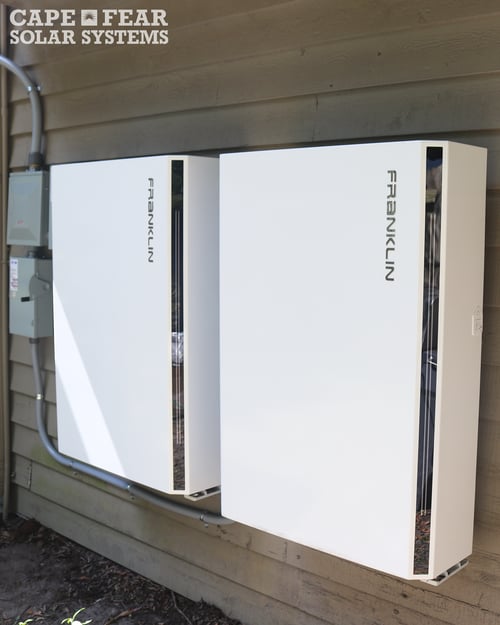
As homeowners experience more frequent outages from storms, grid strain, and weather events, solar paired with battery backup offers something utility companies can’t: continuity.
Battery-backed solar systems allow you to:
- Stay Powered: Keep essential circuits running during hurricane-related outages.
- Peak Shaving: Use your own stored energy when utility rates are at their highest.
- Grid Independence: Reduce your reliance on an overburdened electrical infrastructure.
Even without incentives, the value of reliability and peace of mind is hard to quantify but easy to appreciate when the lights stay on.
Home Value Still Benefits From Solar Ownership
Solar continues to be a differentiator in the housing market.
Multiple studies have shown that homes with owned solar systems sell faster and at higher prices than comparable non-solar homes. Buyers increasingly view solar as a built-in utility upgrade rather than an optional feature.
Even as incentives change, the appeal of lower operating costs and energy resilience remains strong. Solar becomes part of the home’s infrastructure and not just a financial calculation.

The Focus Has Shifted From “Now or Never” to “Built to Last”
Incentive-driven urgency often pushed homeowners to make quick decisions. In 2026, solar conversations are more grounded, more informed, and more strategic.
Today’s homeowners are asking better questions:
- How long will this system serve my home?
- How does it perform during outages?
- How does it affect resale and long-term costs?
- Who will support it years from now?
Cape Fear Solar Systems was built around answering those questions honestly. We focus on system design, durability, and long-term performance. Not short-term pressure.
See more commonly asked questions on our FAQ.
Solar in 2026 is About Control, Not Credits
The strongest reason solar makes sense in 2026 has little to do with incentives and everything to do with control.
Control over:
- Energy costs
- Power reliability
- Long-term household expenses
- Environmental impact
When homeowners step back and look at solar as a 25–30 year asset instead of a tax strategy, the decision becomes clearer.
If you’re ready to explore solar from a long-term perspective with clear numbers, honest guidance, and systems designed for every home, then get a personalized quote and let Cape Fear Solar Systems walk you through what makes sense for your home, now and into the future.